
There is a particular kind of Sunday where the cooking is finished by nine in the morning and the house smells like it all day. This is that Sunday. A pork shoulder, a quarter cup of rub, a cup of cider, and then ten hours of leaving it completely alone.
The work is all at the front. You dry the shoulder, score the fat cap, rub it hard with Smoke ’Em If You Got ’Em, and give it a real sear in a hot skillet before it ever goes near the cooker. Twenty minutes of attention buys you the dark, seasoned crust that ends up shredded all the way through the meat.
After that the slow cooker does the honest work. Collagen melts, the onions underneath cook down into the liquid, and the blade bone eventually pulls out clean in your hand, which is how you know it is ready.
The sauce is eastern North Carolina: cider vinegar, a little brown sugar, pepper and heat, thin enough to run off a spoon. About a cup goes through the pork and the rest goes on the table in a jug, so everyone sauces their own.
Apples are at their peak in the Carolina mountains right now and the cider presses are running, which is why there is cider in the pot instead of water. Cabbage is coming in for the slaw. Make the big shoulder — the leftovers are half the reason to do it.
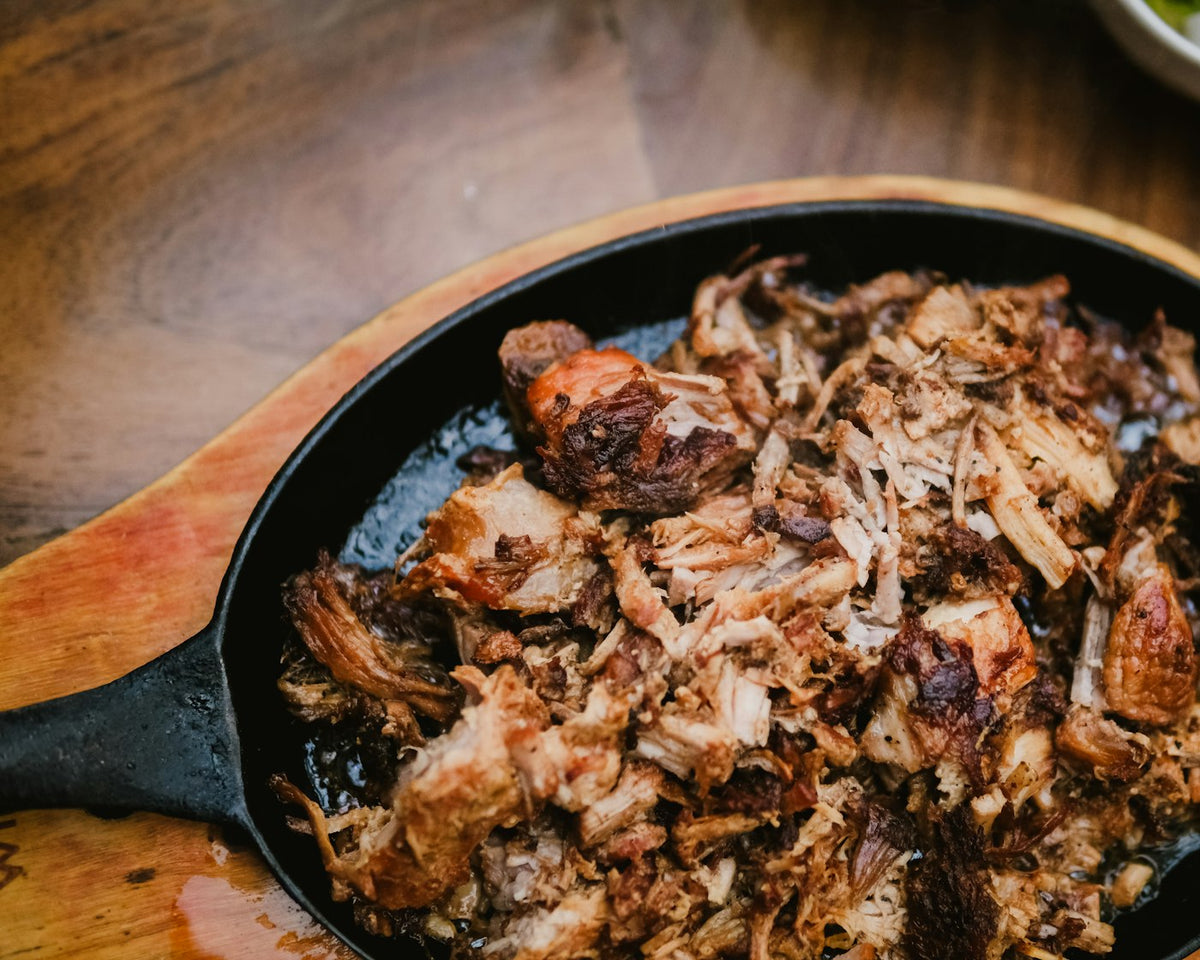
Slow Cooker Pulled Pork with Smoke ’Em If You Got ’Em
Fork-tender slow cooker pulled pork with organic BBQ rub, apple cider and a Carolina vinegar sauce. Feeds eight, and the oven works too.
Ingredients
For the pork
- 1 bone-in pork shoulder (Boston butt), 5 to 6 lb
- ¼ cup plus 1 tsp Smoke ’Em If You Got ’Em organic BBQ rub, divided
- 1 Tbsp avocado oil or olive oil
- 2 large yellow onions, halved and sliced thin
- 6 cloves garlic, smashed
For the pot
- 1 cup apple cider, fresh-pressed if you can get it
- 2 Tbsp apple cider vinegar
- 1 Tbsp yellow mustard
For the Carolina vinegar sauce
- 1 cup apple cider vinegar
- ½ cup of the skimmed cooking liquid
- 2 Tbsp packed brown sugar
- 1 tsp crushed red pepper flakes
- ½ tsp coarsely ground black pepper
To serve
- 8 soft potato or hamburger rolls, split
- Cabbage slaw, for piling on
- Dill pickle chips
- Kosher or flaky sea salt, to taste
Instructions
- Pat the pork shoulder completely dry on every side with paper towels, then score the fat cap in a crosshatch about a quarter inch deep, cutting into the fat but not into the meat. Dry meat browns and scored fat renders; wet, unscored pork just steams.
- Rub ¼ cup of Smoke ’Em If You Got ’Em over the whole shoulder, into the scored fat and around the bone, pressing it in with your hands. Let it sit on the counter for 30 minutes while the pan heats. If you have the evening before, rub it then, wrap it and refrigerate overnight — see the notes.
- Heat the oil in a heavy skillet over medium-high until it shimmers. Sear the shoulder 4 to 5 minutes a side, fat cap last, until there is a deep brown crust. Keep the heat at medium-high and no higher — this rub has organic brown sugar in it, and sugar scorches if you let the pan run away.
- Scatter the sliced onions and smashed garlic across the bottom of the slow cooker in an even bed and set the seared shoulder on top, fat cap up. The onions keep the meat off the hot floor of the cooker and cook down into the sauce.
- Pour the cider into the still-hot skillet and scrape up every browned bit with a wooden spoon. Stir in the cider vinegar and the mustard, then pour it around the pork rather than over it, so the crust you just built stays on the meat. One cup of liquid looks like too little. It is not — a shoulder gives up plenty of its own.
- Cover and cook on LOW for 10 hours, or on HIGH for 6. Do not lift the lid to check before hour eight; every peek costs you twenty minutes. It is done when the blade bone wiggles loose with your fingers and a fork twists in the meat with no fight at all. If it resists, give it another hour — shoulder gets more tender the longer it goes, not less.
- Lift the shoulder onto a board and let it rest 20 minutes. Pull the bone straight out, then shred the meat with two forks, leaving behind the big pockets of fat and keeping the dark, well-seasoned outside bits mixed through. That crust is the best of it.
- Tip the cooker and skim the fat off the surface of the liquid with a wide spoon. A shoulder renders a great deal of it, and skimming is the difference between pork that tastes rich and pork that tastes greasy. Set ½ cup of the skimmed liquid aside for the sauce.
- Make the sauce: in a small saucepan, warm the cider vinegar, the reserved ½ cup cooking liquid, the brown sugar, the remaining 1 teaspoon of Smoke ’Em If You Got ’Em, the red pepper flakes and the black pepper over low heat, stirring until the sugar dissolves. Do not boil it. Thin, sharp and spoonable is what you want.
- Return the shredded pork to the cooker, pour over about a cup of the sauce and toss until every strand is glossy. Let it sit 10 minutes to drink it in. Pile it onto the rolls with slaw and pickles, and put the rest of the sauce on the table in a jug so everyone sauces their own.
Rub it the night before if you can
Thirty minutes on the counter is enough to make this work. A night in the refrigerator makes it better. The salt in the rub has time to travel past the surface, and the organic brown sugar starts drawing moisture to the outside so it browns properly in the pan the next morning. Rub it, wrap it, refrigerate it, and sear it straight from cold — just add ten minutes to the sear.
Boston butt is the cut, and the bone earns its keep
A pork shoulder is two cuts: the butt, which is the upper half, and the picnic, which is the lower. Buy the butt, bone in. It is marbled all the way through with collagen, and collagen is the whole point — ten low hours melt it into gelatin, which is what makes shredded pork silky instead of stringy. The bone adds body to the liquid and gives you a free doneness test: when it pulls out clean, the pork is ready. A boneless butt works, but check it an hour earlier.
One cup of liquid, and why it stays low
A slow cooker loses almost no steam, so anything you pour in stays in. Most of the liquid in that pot at the end came out of the pork itself. Start with a cup of cider and you finish with a concentrated, seasoned braise worth making sauce from. Start with four and you finish with soup, and the pork tastes washed out. Cider rather than water because Henderson County apples are at peak right now and the presses are running — it brings sweetness and a little acid at the same time.
The sauce is Carolina, and it goes on at the table
This is an eastern North Carolina vinegar sauce, not a thick sweet red one: cider vinegar, a little brown sugar, pepper and heat, thin enough to run. Its job is to cut the richness of the pork, which is why it is stirred through at the end and then poured again at the table rather than cooked in. Toss about a cup through the meat and leave the rest in a jug — the people who want it hot and sharp will find it, and the people who do not can leave it alone.
What is good right now
Yellow onions and garlic are out of the fall harvest and will keep in the pantry all winter. Apples in the Carolina mountains are at their peak and the cider presses are running, which is the whole reason cider goes in the pot. Cabbage is coming in for the slaw, and that crunch against rich pork is the point of putting it on the sandwich rather than beside it. Collards are sweetening up after the first cool nights, and roasted sweet potatoes out of the North Carolina harvest make a good plate alongside. The rolls and the pickles come from the store, and that is honest; this is a dish built on one good shoulder and a long day.
No slow cooker, a crowd, and the day after
Without a slow cooker, use a Dutch oven at 300°F, covered, for 5 to 6 hours. Feeding more than eight: two shoulders fit in a 7-quart cooker, but keep the liquid at about 1½ cups total and add two hours. Leftovers are the reason to make the big one. Store the pork submerged in its sauce for up to four days, or freeze it in meal-sized bags for three months. It reheats gently in a covered pan with a splash of cider, and it is excellent on a baked potato, folded into an omelette, or piled on nachos.
One seasoning doing the whole job
Smoke ’Em If You Got ’Em is our USDA Certified Organic BBQ rub, built from ten clean ingredients and sea salt — small batch, no MSG, no fillers, no anti-caking agents, and family-run from the start. The seasoning itself is gluten free and kosher; the rolls and most Worcestershire-style condiments are not, so swap those if you need the sandwich to be. It only comes in the 5 oz resealable pouch, and that is on purpose: we do not add anti-caking chemicals, and a blend built on organic garlic and brown sugar will eventually cake in a glass jar without them. One pouch seasons two Boston butts, so a sandwich-for-ten Sunday costs you half a bag.
The salt-pepper-garlic version, if you would rather skip the sugar
Some people want pulled pork without any sweetness in the rub at all. Swap the BBQ rub for the same quantity of The OG, our organic salt, pepper and garlic blend, and leave the brown sugar out of the sauce as well. You lose the bark that the organic brown sugar builds, and you gain a cleaner, more savory pork that leans entirely on the cider and the vinegar. Both are good. They are simply different sandwiches.
More for the same table
The same rub, a different cook: Smoke ’Em If You Got ’Em Baby Back Ribs are the oven version, and Party Ribs are what to make when the whole street is coming. Cider-Braised Pork Chops with Apples is the weeknight answer with the same bottle of cider, and Crispy Smashed Potatoes are what goes beside these sandwiches. If it is tacos you are after rather than a bun, slow-cooked carnitas street tacos take the same cut somewhere else entirely.