
There is a particular kind of dinner that smells like somebody's grandmother is standing at the stove, and this is one of them. The difference is that it takes forty minutes and one pan, and most of that is the beans quietly thickening while you set the table.
Italian sausage goes in first and is left alone long enough to crust properly. The onion and garlic cook in the fat it leaves behind, and that is where The Godfather goes in — straight into the hot fat for forty-five seconds, where dried oregano, basil and rosemary give up far more than they ever would in a pot of liquid.
Then the beans, and the one step people skip: press about a quarter of them against the side of the pan. Their starch turns the broth silky. That is the entire sauce. No cream, no flour, nothing else to wash up.
The kale is the part worth going to the market for. After the first cool nights the lacinato, the collards and the chard in the Carolinas are all at their best, and any of the three works here. A handful at a time, stirred down, until it is tender and deep green.
Shallow bowls, Parmesan over the top, bread on the table for mopping. It feeds four on a Tuesday and it doubles for a crowd on a Sunday.
Italian Sausage and White Bean Skillet with The Godfather
A one-skillet dinner of Italian sausage, creamy white beans and kale with organic Godfather Italian seasoning. Forty minutes, one pan, serves four.
Ingredients
For the skillet
- 1 lb bulk Italian sausage (or links, casings removed)
- 1 Tbsp olive oil
- 1 medium yellow onion, diced
- 4 cloves garlic, thinly sliced
- 2 tsp The Godfather organic Italian seasoning, divided
- 1/4 tsp crushed red pepper flakes (optional)
For the beans and greens
- 2 cans (15 oz each) cannellini or Great Northern beans, drained and rinsed
- 1 cup low-sodium chicken broth
- 1 bunch lacinato kale (about 5 oz), stems stripped, torn into bite-size pieces
To finish and serve
- 1 Tbsp unsalted butter
- Juice of half a lemon
- Kosher or flaky sea salt, to taste
- Grated Parmesan, to taste
- Crusty bread, for mopping
Instructions
- Heat the olive oil in a 12-inch skillet over medium-high until it shimmers. Add the sausage and break it into rough, bite-size chunks with a wooden spoon. Now leave it alone for 3 or 4 minutes. Cook 6 to 8 minutes in all, turning the pieces only once or twice, until the edges are dark and crusted rather than evenly gray. Those browned edges are most of the flavor in this pan.
- Lift the sausage out onto a plate with a slotted spoon and leave every bit of the rendered fat behind. That fat is the cooking medium for everything that follows.
- Lower the heat to medium and add the diced onion to the fat. Cook about 4 minutes, scraping the bottom as it softens, until it is translucent and the browned bits have loosened.
- Add the sliced garlic, 1 teaspoon of The Godfather and the red pepper flakes if you are using them. Stir constantly for about 45 seconds, until the garlic turns pale gold and the herbs smell toasted. Do not walk away here; dried herbs go from fragrant to bitter in about fifteen seconds.
- Pour in the drained beans and the broth and stir, scraping up anything still stuck to the pan.
- Press about a quarter of the beans against the side of the skillet with the back of your spoon and stir them in. Their starch is what turns the broth into a silky sauce, which is how this dish gets creamy with no cream and no flour.
- Simmer uncovered for 5 minutes, until the liquid has thickened enough to coat the spoon.
- Add the kale a large handful at a time, stirring each batch down before the next goes in. It will look like far too much and it will not be. Cook 3 to 4 minutes, until the leaves are tender and deep green.
- Return the sausage and any juices from the plate to the pan. Stir in the butter, the remaining 1 teaspoon of The Godfather and the lemon juice, and simmer 2 minutes more so it all comes together. Taste before you salt: the sausage has already done some of that work.
- Spoon into shallow bowls, grate Parmesan over the top, and put the bread on the table for mopping. This wants to be eaten hot, straight away.
Bloom the seasoning, do not sprinkle it
The herbs go into the hot sausage fat with the garlic, not over the finished pan. Dried oregano, basil and rosemary give up their flavor to fat far better than to water, so forty-five seconds in that skillet pulls out more than ten minutes of simmering would. It is the single reason a forty-minute pan can taste like it sat on the stove all afternoon. The second teaspoon goes in at the very end, so you get the toasted version and the fresh version in the same bite.
Mash a quarter of the beans
This is the whole trick to the sauce. Pressing some of the beans against the side of the pan releases their starch into the broth and thickens it into something silky that clings to the kale. No cream, no roux, no second pan to wash. If you want it looser, add a splash more broth at the end; if you want it thicker, mash a few more.
Let the sausage sit still
The instinct is to stir, and stirring is what gives you gray crumbles swimming in fat. Put the meat down, break it up once, and then let the pan do its work for three or four minutes before you touch it. You are after dark, crusted edges on at least half the pieces. Everything that sticks to the bottom gets scraped up into the beans two steps later.
What is good right now
Lacinato kale is at its best in the Carolinas after the first cool nights, and so are the collards and the Swiss chard beside it at the market — any of the three works here, chopped, with the collards wanting an extra two or three minutes. The yellow onions and the garlic are out of the fall harvest and will keep in the pantry all winter. The last of the sweet peppers are worth a diced half if you still see them. The beans come out of a can and the bread comes from the store, and that is honest: this is a weeknight pan built on good greens and one good sausage.
Feeding more, and the day after
This doubles cleanly in a large Dutch oven — brown the sausage in two batches so it browns rather than steams, and go up to about a cup and a half of broth rather than two full cups. It keeps four days in the refrigerator and is arguably better on day two, once the beans have drunk the sauce. Reheat it gently with a splash of broth. A fried egg on top makes it breakfast, and a spoonful over polenta makes it a different dinner altogether.
One seasoning doing the whole job
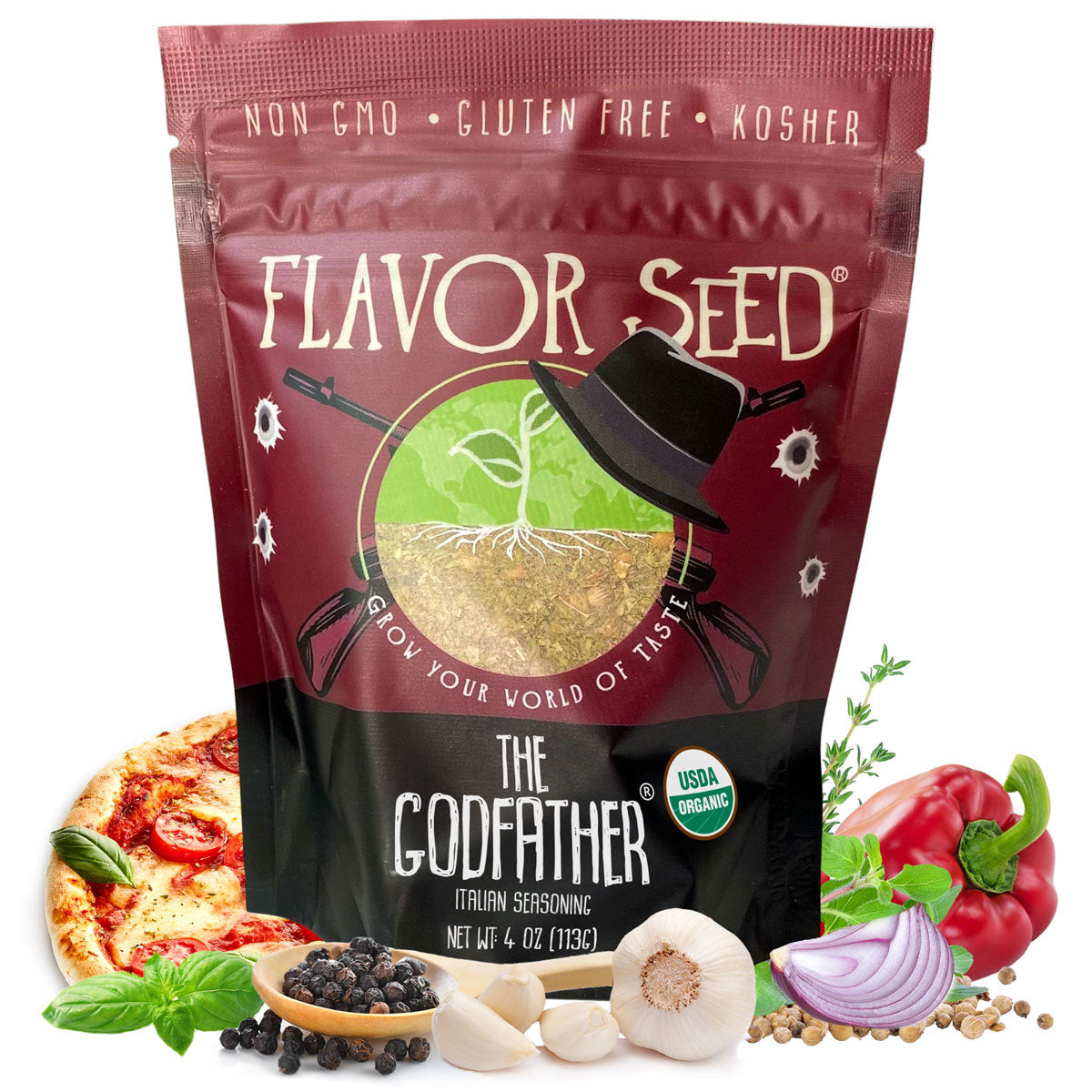
The Godfather is our USDA Certified Organic Italian blend — oregano, basil, garlic and rosemary, small batch, no MSG, no fillers, no anti-caking agents. The seasoning itself is gluten free and kosher; the crusty bread you serve alongside is not, so leave it off or swap it if the table needs that. Use low-sodium broth as written and let the sausage and the blend set the salt, with more on the table for whoever wants it. Buy the 4 oz resealable pouch over the glass jar — better value, and it is far easier to pinch from with one hand mid-cook.
More of the same seasoning
If this pan is your speed, The Godfather One-Pan Chicken Parmesan Pasta is the other weeknight one-pan dinner in the same blend. Godfather Bread Dip is what to put out while this cooks, The Godfather Italian Salad Dressing turns the leftovers into a lunch salad, and The Godfather Italian Sub is the cold-sandwich version of the same flavors. For white beans in another mood entirely, see the Greek White Bean Salad.